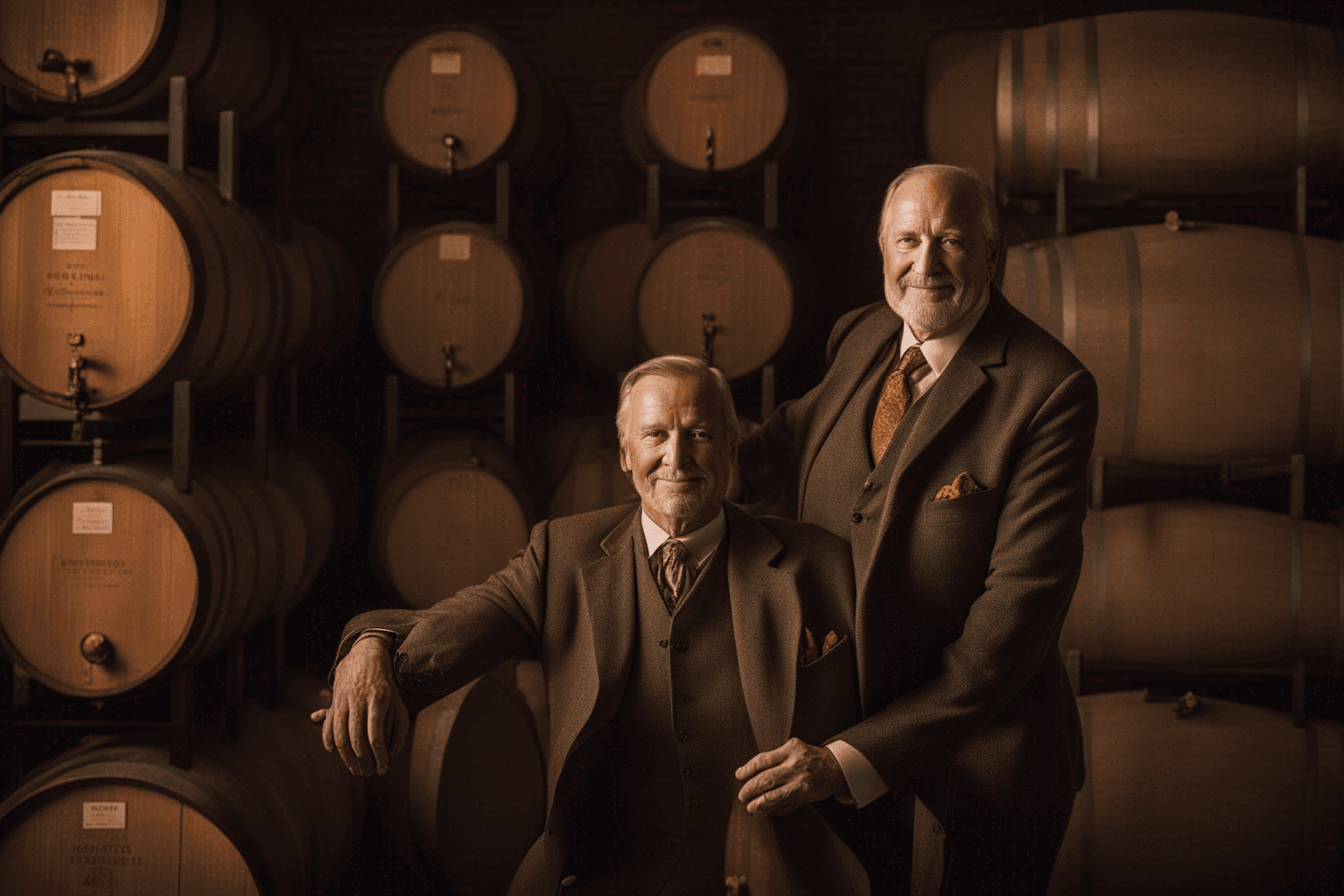
Behind the Barrel: How Wilderness Trail's Shane Baker Is Rewriting Kentucky Bourbon
Wilderness Trail's co-founder on sweet mash science, proprietary yeast, and why the best bourbon innovations are happening in Danville, not Louisville.

“We’re not trying to make bourbon the way it’s always been made. We’re trying to make it better.”
Shane Baker doesn’t mince words. The co-founder of Wilderness Trail Distillery in Danville, Kentucky, spent 15 years as a fermentation scientist before he ever filled a barrel. That background shows in every decision at Wilderness Trail—from their controversial sweet mash process to the five proprietary yeast strains they developed in-house. Since opening in 2012, they’ve quietly become one of Kentucky’s most innovative distilleries, then got even louder when Campari acquired them in 2022.
I sat down with Baker at their Danville campus to talk science, skepticism, and why sour mash might be overrated.
The Conversation
You have a fermentation science background. What made you want to start a distillery instead of staying in the lab?
I loved the lab work, but I wanted to see the science applied at scale. My partner Pat Heist and I had been consulting for distilleries for years—helping them troubleshoot fermentation issues, optimize yields, that kind of thing. We kept seeing the same problems: inconsistent fermentation, flavor drift, poor yeast management. We thought, “Why don’t we just build a distillery that does this right from the start?” So we did.
Wilderness Trail uses sweet mash instead of sour mash. That’s unusual. Why?
Because sour mash is a biological crutch, not a flavor necessity. The whole point of sour mash—adding spent mash from the previous batch—is pH control. It lowers the pH to create an environment where wild bacteria struggle and your yeast thrives. But if you have proper sanitation protocols and healthy yeast cultures, you don’t need it. We can hit the exact pH we want with fresh water and achieve complete fermentation consistency without carrying over biological baggage from previous batches. That means cleaner, brighter flavors. No musty notes. Just grain, yeast, and water.
You’ve developed five proprietary yeast strains. How do they differ?
Each strain emphasizes different flavor compounds. One might push more fruity esters—think apple and pear. Another leans into spice phenolics—clove, cinnamon. A third maximizes higher alcohols for richer body. We isolated these strains over years of testing, then scaled them up for production. Most distilleries use one or two commercial strains and call it a day. We have five tools in the toolbox, and we can dial in the exact flavor profile we want for each mashbill.
Do you ever blend fermentations from different yeast strains?
Absolutely. Our Single Barrel program lets us showcase individual yeast strains, but for our Small Batch releases, we’re often blending barrels that were fermented with different yeasts. It’s another layer of complexity. You’re not just blending barrels—you’re blending biological systems.
You use both #3 and #4 char on your barrels. What’s your selection philosophy?
Char level is massively underrated in bourbon. Most producers default to #4—the “alligator char”—because that’s what everyone does. But #3 char has a thinner char layer and more intact wood sugars just beneath the surface. That means faster extraction of caramelized sweetness and less tannic bitterness. We use #3 for wheated bourbons where we want softer, rounder flavors. #4 goes on high-rye mashbills where we can handle more aggressive wood influence. It’s not one-size-fits-all.
Campari acquired Wilderness Trail in 2022. What’s changed?
Honestly? Not much on the production side. We’re still making the same bourbon the same way. What’s changed is scale and distribution. We can now get our whiskey into markets we never could have reached independently. Campari understands that they bought Wilderness Trail because of what we do—they’re not trying to turn us into something else. The science stays the same. The barrels stay the same. We just have more of them.
Bourbon is in a weird place right now. What’s your take?
It’s unsustainable and ultimately bad for the category. When people are flipping bottles for 10x retail, you’ve lost the plot. Bourbon should be enjoyed, not speculated on. We’re trying to keep our core range accessible—good bourbon at fair prices. The limited releases will always exist, but they shouldn’t define the brand. If your distillery only matters because of one annual release, you’re not building a sustainable business.
What’s the most misunderstood thing about bourbon production?
That older is always better. Age is one variable among dozens. A poorly made bourbon doesn’t get better at 15 years—it just gets more expensive. A well-made bourbon can be exceptional at 6 years. We’re more focused on quality per year than accumulating years for bragging rights.
What are you most excited about for Wilderness Trail’s future?
Our oldest barrels are hitting 10+ years now. That’s a huge milestone. We’re also expanding our experimental program—different grains, different fermentation temperatures, different warehouse environments. The science never stops. There’s always another variable to test, another question to answer. That’s what makes this fun.
Baker walked me back through the distillery after our conversation, pointing out fermentation tanks with the pride of a parent at a science fair. Wilderness Trail might be owned by a global spirits company now, but it still feels like a scientist’s playground—one where every barrel is an experiment and every bottle is proof that innovation beats tradition when the science is sound.