Is Bourbon Gluten-Free?
<![CDATA[]]>
Bourbon occupies a special place in the whiskey hierarchy, revered by the most discriminating drinkers. Hugely popular all over the world, it stands proudly among all the other respected spirits.
But is bourbon suitable for those on a gluten-free diet? Can you still enjoy the distinctive flavors of this amber-colored spirit if you are trying to avoid gluten?
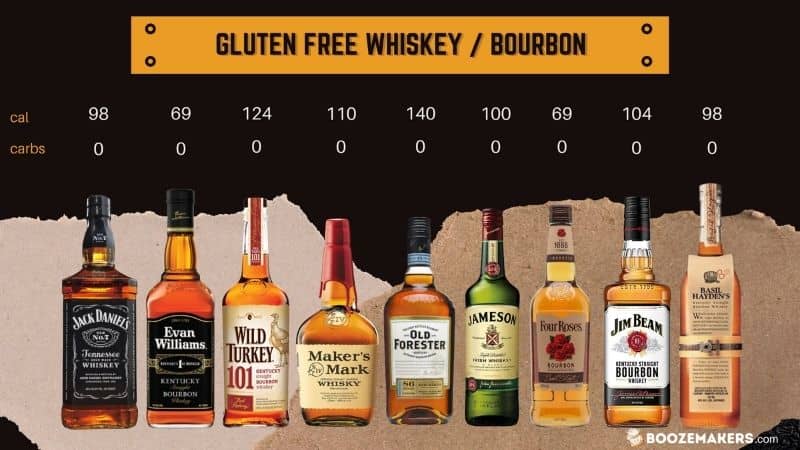
The good news is that bourbon can be compatible with a gluten-free diet. That’s because it doesn’t contain any carbohydrates and only a negligible number of calories.
Taken on its own–that is, without other spirits or mixers–bourbon is relatively gluten-free even if it is distilled from rye, wheat, and barley. The distillation process results in a spirit that has zero carbs and only 97 calories in a 1 ½ ounce shot.
What makes bourbon gluten-free?
The word “whiskey” originates from an Irish phrase that means “water of life”. Enjoyed by whisky aficionados and casual drinkers worldwide, it is produced from a combination of grains, the bulk of which is corn.
Producing the spirit involves a distillation process where fermented grain mash is aged in oak barrels. The mash is first heated to extract the flavors in vapor from the mixture before condensing it back to liquid.
Next, the fermented mixture is separated from the alcohol. Because the gluten doesn’t evaporate, it remains in the barrel in solid form. This is the reason why bourbon doesn’t contain significant amounts of gluten.
Labeling requirements
The Celiac Disease Foundation (CDF) has pronounced bourbon safe to consume for those on a gluten-free diet due to the removal of gluten during the distillation process. However, in the United States, only the Tobacco Tax and Trade Bureau (TTB) is allowed to label distilled alcoholic beverages.
This is where it gets tricky. The TTB prohibits manufacturers from labeling distilled drinks made from gluten ingredients as “gluten-free”. Instead, the foundation proposed the inclusion of the phrase “processed or treated or crafted to remove gluten” on the label. This indicates that the gluten was present in the raw grain ingredients but was removed during distillation.
It is worth noting that people with gluten intolerance may have a slight risk of adverse reactions to bourbon. This could be caused by trace amounts of gluten left in the spirit during improper distillation.
Cross-contamination may also result in the presence of gluten in bourbon. This could occur in distillation facilities that also process products that contain gluten.
Other reasons for the presence of gluten include the addition of undistilled grain mash for flavoring or the use of barley malt for coloring.
Can bourbon be included in a gluten-free diet?
The bottom line is that bourbon is generally safe to drink if you are on a gluten-free diet. But you should probably opt for other distilled spirits if you have severe gluten intolerance. If that is the case, it might be best to avoid spirits made from distilled grain altogether.
When in doubt, always consult your doctor and ask which types of spirits are safe for you to consume. It is also good practice to check the labels of every spirit you plan to buy to find out which ones contain gluten and which ones are gluten-free.
If you can tolerate gluten in small amounts and have a craving for bourbon, there are many relatively safe options you can try. An excellent example is Hudson Baby Bourbon, which is distilled entirely from corn.
Although the manufacturer of Hudson Baby Bourbon stops short of labeling it “gluten-free”, the absence of other grains apart from corn makes it a safer option than other bourbons on the market.
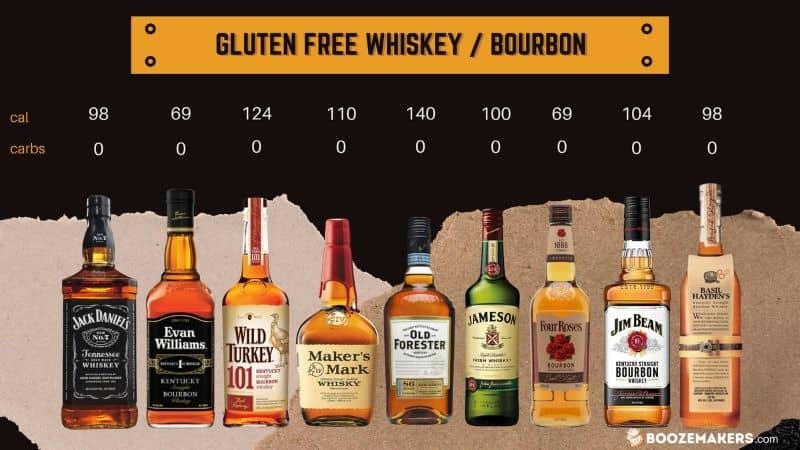
Here’s a list of other corn based bourbons you can try:
- Basil Hayden’s
- Bulleit Barrell
- Jim Beam Bourbon
- Four Roses
- Old Forester
- Michter’s
- Colonel E.H. Taylor, Jr.
- Evan Williams
- Wild Turkey Bourbon
- Knob Creek
- Old Crow
- Maker’s Mark Bourbon
- Elijah Craig
- Crown Royal Canadian Whiskey
- Jameson Whiskey
- Jack Daniel’s Whiskey
- Glenfiddich Scotch
Again, none of these are labeled as “100% gluten-free”, and the manufacturers make no claims about their products being free from the possible effects of cross-contamination. But these bourbons should be safe to consume in moderation if you don’t have a severe case of gluten intolerance.